If you came here looking for Joe Rogan’s supplement stack, understand this before you buy 19 bottles of stuff:
There is no single permanent Joe Rogan stack.
Rogan has talked about supplements for well over a decade. Some products are things he has discussed using recently. Some are old habits. Some are sponsored. Some come from companies he has had a financial relationship with. And some are not really “Joe Rogan supplements” at all. A guest mentioned them, the internet copied the claim 500 times, and suddenly they became part of his supposed daily routine.
This page cleans that mess up.
The short version: Creatine is the easiest yes. Vitamin D, omega-3s, magnesium and electrolytes can make sense when you actually need them. AG1 is convenient but expensive. Alpha Brain is interesting but financially connected to Rogan. Pure Encapsulations Macular Support is one of his more specific recent product mentions. The farther you get into testosterone boosters, longevity compounds and experimental peptides, the more skeptical you should become.
Last reviewed: September 6, 2026. Newer public mentions beat ancient stack lists here, and older information is labeled as historical.
Joe Rogan’s supplement stack at a glance
This is the table we wish existed when we started researching this stuff.
| Supplement / product | Rogan status | Our take | Worth shopping? |
|---|---|---|---|
| Creatine monohydrate | Recent use | Excellent evidence, cheap, boring in the best way | Yes |
| AG1 / Athletic Greens | Current / sponsored | Convenient all-in-one, expensive | Maybe |
| Pure Encapsulations Macular Support | Recent specific use | Legitimate Rogan mention; eye claims need context | Maybe |
| Alpha Brain | Long-running / financial tie | Some human research; not magic | Maybe |
| Magnesium | Recent / recurring | Useful when intake is low; form matters | Yes, if needed |
| Vitamin D3 | Historical confirmed dose | Useful when low; do not copy his dose blindly | Yes, if needed |
| Vitamin K2 | Discussed with D3 | Context-dependent | Maybe |
| Omega-3 fish oil | Long-running JRE topic | Compare EPA + DHA, not the giant front-label number | Yes, if needed |
| Neuro Gum | Recent recommendation | Caffeine + L-theanine in a convenient format | Maybe |
| L-theanine | Recurring | Cheap, sensible caffeine pairing | Maybe |
| Beta-alanine | Recent recommendation | Legit sports supplement for specific training | Maybe |
| Electrolytes | Training / sauna context | Very useful when replacing real sweat losses | Yes, when needed |
| Athlete’s Pure Pack | Historical use | Convenient multivitamin pack, older reference | Maybe |
| Shroom Tech Sport | Historical / Onnit | Much weaker case than creatine | Low priority |
| Zinc / vitamin C | Recurring | Basic nutrients, not superpowers | If needed |
| Lion’s mane | JRE-discussed | Interesting early research, still overhyped | Optional |
| Tongkat ali | Mostly guest-driven | Limited human evidence | Cautious |
| Fadogia agrestis | Mostly guest-driven | Major human safety-data gap | Skip |
| NMN / NAD+ / resveratrol | Longevity discussions | Fascinating science; marketing is ahead of outcomes | Cautious |
| BPC-157 / peptides | Discussed | Experimental compounds, not normal supplements | Not an OTC stack item |
| TRT | Rogan openly discusses use | Prescription hormone therapy | Not a supplement |
If you only want the five that matter most
If a friend asked, “I like Rogan, I train, I don’t want to spend $400 a month, where do I start?” this is the sane version:
- Creatine monohydrate if you train and tolerate it.
- Vitamin D if bloodwork and circumstances suggest you need it.
- Omega-3s if you rarely eat fatty fish.
- Magnesium if your diet is short on it or you have a specific reason to supplement.
- Electrolytes when hard training, heat or sauna creates a real replacement need.
That is intentionally boring.
The supplement industry hates boring because plain creatine costs less than a bottle covered in lightning bolts and words like neuro-anabolic. Your muscles do not care about the label design.
1. Creatine: probably the easiest yes on this entire page
Status: recent use. Evidence: strong. Value: excellent.
Creatine is one of the clearest recurring parts of Rogan’s routine. For years he talked about creatine gummies. More recently, he said he moved back toward powdered creatine because eating enough gummies to get the amount he wanted became ridiculous.
That is useful because it gets to the core of supplement buying: the ingredient matters more than the delivery gimmick.
What creatine should you buy?
For almost everyone shopping this category: 100% creatine monohydrate powder.
You generally do not need creatine HCl, an “advanced creatine matrix,” a proprietary blend or a $60 tub designed like military hardware.
Shop plain creatine monohydrate on Amazon
Compare third-party-tested creatine
Our existing Joe Rogan creatine guide has the powder-vs-gummies rabbit hole.
Creatine has decades of research behind improvements in strength and repeated high-intensity exercise performance. Cognitive research is interesting too, but the gym-performance case is more established.
Verdict: if you want one Rogan supplement that survives contact with mainstream sports nutrition research and a normal person’s budget, this is it.
2. AG1 / Athletic Greens
Status: current public association. Commercial relationship: yes.
AG1 is recognizable in Rogan’s orbit, and it is exactly the kind of product where disclosure matters. Rogan has had a commercial relationship with AG1.
Two things can be true: he may genuinely like and use it, and he is not an independent reviewer of it.
Is AG1 worth it?
AG1 is best understood as a convenience product. One daily powder packages a large collection of vitamins, minerals and other ingredients together.
It does not replace vegetables, fruit, fiber, adequate protein, sleep, exercise or appropriately correcting a known deficiency.
If you value convenience highly and the price does not bother you, maybe. If you want maximum evidence per dollar, a targeted routine around your actual diet and needs will usually be cheaper.
Check current AG1 listings on Amazon
Verdict: good convenience proposition, weak choice if maximum value is the goal.
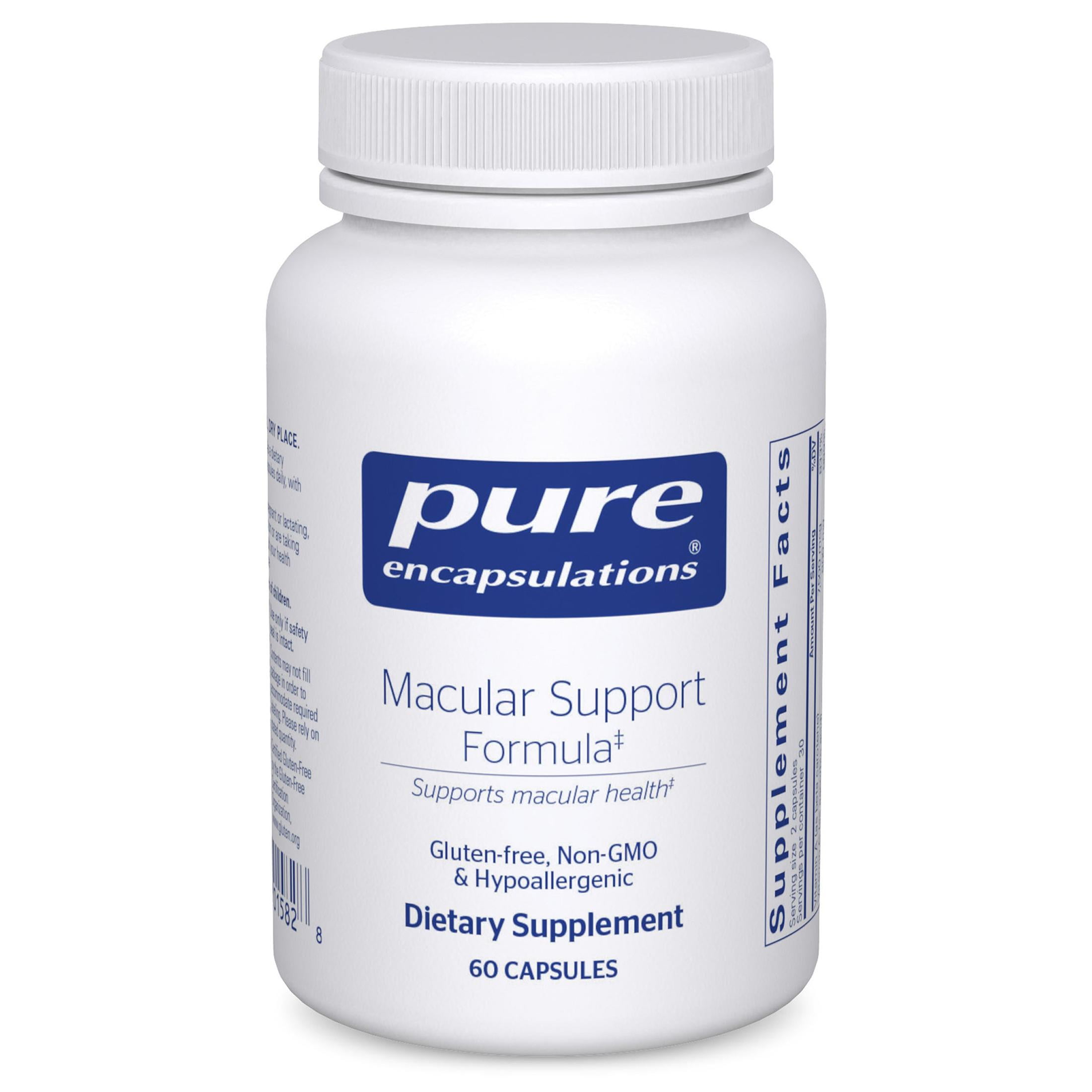
3. Pure Encapsulations Macular Support
Status: recent specific use. Rogan says no company relationship.
This is one of the more interesting entries because it is unusually specific. Rogan has discussed Pure Encapsulations Macular Support, said he purchases it himself, and described improvements in his eyesight while using it alongside red-light therapy.
That is worth reporting accurately. It is not proof that the supplement caused his vision to improve.
Shop Pure Encapsulations Macular Support
Eye-health formulas commonly include carotenoids such as lutein and zeaxanthin, which have legitimate scientific interest in retinal health. If your eyesight is changing, though, get your eyes examined rather than turning a Rogan anecdote into a treatment plan.
Verdict: one of the strongest “yes, Rogan specifically talks about this exact product” entries. Whether you need it is separate.
4. Alpha Brain and Alpha Brain Black Label
Status: long-running use. Commercial relationship: absolutely.
If people had to name one Joe Rogan supplement, Alpha Brain might beat creatine because Rogan and Onnit have been associated for so long.
Rogan was an early partner and investor in Onnit and helped make the brand enormous. That financial history is not a footnote. It belongs next to the recommendation.
Does Alpha Brain work?
There have been human studies and some positive findings on specific cognitive outcomes. That is more than can be said for plenty of nootropic blends.
It still does not mean two capsules turn you into the guy from Limitless.
Sleep, exercise, nutrition and stress management are vastly more important to cognition than any nootropic bottle.
Black Label is positioned as the more premium version. More ingredients and a higher price do not automatically mean a proportionally better result.
Verdict: more credible than random nootropic blends, but expensive and commercially tied to Rogan. Evaluate it as a product, not part of the JRE religion.
5. Magnesium
Status: recurring/recent. Evidence: context-dependent but legitimate.
Rogan has discussed magnesium repeatedly, including alongside vitamin D3 and K2 and in nighttime routines.
The shopping problem is that “magnesium” is not one product.
| Form | Why people buy it | What to know |
|---|---|---|
| Magnesium glycinate | General / evening use | Popular for tolerability |
| Magnesium citrate | Magnesium + bowel effect | Can be noticeably laxative |
| Magnesium L-threonate | Brain / cognition marketing | Expensive; evidence is smaller than the hype |
| Magnesium oxide | Cheap, common | Often not the first choice for absorbed magnesium |
| Multi-form blends | Convenience | More forms do not automatically mean better |
Verdict: reasonable when there is a reason to take it. Do not pay a giant premium because the label says “brain magnesium.”
6. Vitamin D3
Status: long-running discussion. Historical exact dose: 5,000 IU/day in 2020.
This is where lazy stack articles become a problem.
In a 2020 conversation with Dr. Rhonda Patrick, Rogan said he was taking 5,000 IU of vitamin D per day. That does not mean his current 2026 dose is 5,000 IU and definitely does not mean you should take 5,000 IU.
Vitamin D needs vary with blood level, sun exposure, diet, season and medical context.
Verdict: vitamin D matters. Testing and context beat celebrity-dose cosplay.
7. Vitamin K2
Status: discussed alongside D3 and magnesium.
Rogan has discussed combining D3, K2 and magnesium. K2 gets paired with vitamin D because both are involved in calcium physiology, but that does not make a high-dose D3/K2 combo mandatory for everyone.
Vitamin K is especially important to discuss with a clinician or pharmacist if you use warfarin or another medication affected by vitamin K intake.
8. Omega-3 fish oil
Status: long-running JRE health topic.
Omega-3s, especially EPA and DHA, have been a recurring subject in Rogan’s health conversations.
The biggest shopping mistake is buying based on the giant number on the front of the bottle. A label can scream 1,000 MG FISH OIL while providing a much smaller amount of EPA and DHA.
Look for EPA, DHA, serving size, quality controls and third-party testing.
Shop high-EPA/DHA omega-3 fish oil
If you already eat fatty fish regularly, the calculation changes.
Verdict: potentially useful, but buy the actual EPA/DHA content rather than the biggest front-label number.
9. Neuro Gum
Status: recent recommendation. Rogan has said he has no connection to the company.
Neuro Gum sounds more exotic than it is. The basic appeal is caffeine + L-theanine delivered in gum.
That is not an insult. Convenience is a real feature.
Our Joe Rogan Neuro Gum guide goes deeper.
If you want caffeine without coffee or an energy drink, it makes sense. If you only want caffeine and L-theanine cheaply, separate generic products usually win on price.
Verdict: clever format, straightforward ingredients. Delivery format is not a new branch of neuroscience.
10. L-theanine
Status: recurring, often paired with caffeine.
L-theanine is one of the more sensible nootropic ingredients because the pitch is modest: pair it with caffeine and some people find the stimulation feels smoother.
Verdict: if caffeine makes you wired, this is a more rational experiment than a $90 “executive cognition matrix.”
11. Beta-alanine
Status: recent positive mention. Evidence: good for specific performance demands.
Beta-alanine increases muscle carnosine and is most relevant to repeated or sustained high-intensity efforts where acid accumulation becomes performance-limiting.
The famous side effect is harmless tingling/itching after larger doses. That sensation does not mean it is “kicking in.” It means beta-alanine can make your skin tingle.
Verdict: useful for the right athlete, nowhere near as universal as creatine.
12. Electrolytes
Status: practical fit with Rogan’s training and sauna habits.
This category makes sense when you remember Rogan trains hard and uses a sauna regularly.
If you are sweating heavily, replacing fluid and sodium is basic physiology. If you spent the day answering email in air conditioning, you probably do not need a $2 packet of artisanal salt water.
Start with sodium, usually the electrolyte lost in the largest amount through sweat. Potassium and magnesium matter too, but do not buy based solely on how many minerals fit on the front of the packet.
Verdict: highly useful in the right situation, unnecessary as a fashion accessory.
13. Athlete’s Pure Pack
Status: historical Rogan use.
Rogan historically talked about Pure Encapsulations Athlete’s Pure Pack, particularly the convenience of individually packaged daily supplements.
It is legitimate history, not proof it remains in his current daily routine.
14. Zinc and vitamin C
Status: recurring, especially in immunity discussions.
Both are essential nutrients. Neither turns your immune system into a force field.
Chronically overdoing supplemental zinc can interfere with copper status, which is a good example of why “more” is not synonymous with “healthier.”
Verdict: basic nutrients, not superpowers.
15. Quercetin and glutathione
Status: discussed in immunity/wellness contexts.
Quercetin is a plant flavonoid with real research interest and a much larger internet reputation. Glutathione is an antioxidant your body actually makes, which has generated an enormous amount of “detox” marketing.
Shop quercetin | Shop glutathione
Oral glutathione formulations vary, and a capsule is not equivalent to an IV treatment.
Verdict: interesting extras. Broad detox claims should set off your skepticism alarm.
16. Shroom Tech Sport
Status: historical Onnit use. Commercial relationship: yes.
Shroom Tech Sport appeared in older Rogan workout discussions and comes from Onnit.
Verdict: if your budget is finite, creatine gets the money first by a mile.
17. Spirulina and chlorella
Status: historical greens category.
These algae-based ingredients appeared in the broader Rogan/Onnit greens universe.
They contain nutrients and interesting compounds. Calling them universal detox agents is a much bigger claim.
18. Lion’s mane
Status: heavily JRE-discussed; current daily Rogan use is less clear.
Lion’s mane may be the perfect podcast supplement: fascinating biology, promising early research and marketing that has sprinted ahead of the evidence.
Shop third-party-tested lion’s mane
Verdict: interesting enough to watch, not established enough to put next to creatine as a slam dunk.
19. Apigenin
Status: mostly guest-driven / strongly associated with Andrew Huberman’s sleep stack.
This is why attribution matters. Apigenin gets included in “Joe Rogan stacks” because it has been discussed in the JRE ecosystem. That is not the same as verifying it as a permanent Rogan daily supplement.
Verdict: discussed around JRE is not the same thing as Joe takes it every night.
20. Tongkat ali and fadogia agrestis
Status: mostly guest-driven.
Tongkat ali is marketed around testosterone, libido and male performance. There is some human research, but the evidence is thinner than the confidence level of the average supplement ad.
Shop third-party-tested tongkat ali
Fadogia is a different story. Human evidence and safety data are extremely limited.
We are intentionally not turning fadogia into a shopping recommendation.
Verdict: tongkat is interesting but non-foundational. Fadogia is a skip unless the evidence picture changes dramatically.
21. Glucosamine, chondroitin and MSM
Status: historical joint-support discussion.
These are old-school joint supplements, which almost makes them refreshing compared with the longevity molecule of the week.
Shop glucosamine + chondroitin + MSM
Research results are mixed. Some people report meaningful symptom improvement; average trial effects are less dramatic.
22. Collagen peptides
Status: JRE-adjacent recovery discussion.
Collagen has legitimate research behind some specific skin and connective-tissue outcomes, but it gets marketed like powdered youth.
It is still protein and is not a substitute for hitting your overall protein needs.
23. NMN, NAD+ and resveratrol
Status: longevity discussions, largely guest-driven.
This is where podcast science gets extremely seductive.
NMN is tied to NAD+ biology and aging research. NAD+ itself gets used as a marketing umbrella for very different interventions. Resveratrol generated enormous excitement from mechanistic and animal research.
Browse NMN | Browse resveratrol
The mechanisms are interesting. Early human work is interesting. “Therefore this makes humans live substantially longer” is not established.
An IV clinic procedure, an oral NAD-related product and an NAD+ precursor are also not interchangeable.
Verdict: science worth following; not where we would spend the first dollar of a health budget.
24. Exogenous ketones
Status: historical metabolic/performance discussion.
Exogenous ketones can raise blood ketone levels. That is not the same thing as reproducing every effect of fasting or a ketogenic diet.
Verdict: niche tool, heavily overmarketed.
25. CBD
Status: long-running Rogan discussion.
Rogan has discussed CBD for years around recovery, discomfort and sleep.
Evidence depends heavily on condition, dose and product. An FDA-approved prescription cannabidiol medicine for specific seizure disorders does not mean a retail CBD gummy is proven to fix sleep, pain and anxiety.
We do not treat CBD as a foundational supplement or use Amazon as our default source for ingestible CBD products.
The things people call Joe Rogan supplements that are not supplements
Some stack pages put creatine, testosterone and unapproved peptides in one table as if they are different flavors of multivitamin. They are not.
TRT / testosterone replacement therapy
Rogan has openly discussed using testosterone replacement therapy.
TRT is prescription hormone treatment requiring medical evaluation and monitoring. It also matters when people look at Rogan’s physique and assume the difference between his results and theirs is Alpha Brain and fish oil.
It isn’t that simple.
BPC-157 and other peptides
Rogan has discussed BPC-157 and other peptides around injury and recovery.
These are experimental drug-like compounds, not routine dietary supplements. BPC-157 is not an FDA-approved dietary supplement, and high-quality human evidence is extremely limited.
See our Joe Rogan peptides guide.
IV vitamin and wellness drips
An IV is a medical procedure. Putting nutrients into a vein is not simply the premium version of taking a capsule.
Follow the money: which recommendations are financially connected?
A commercial relationship does not automatically make a recommendation false. It changes how much independent weight you should give the endorsement.
Onnit
Rogan was an early partner/investor in Onnit, the company behind Alpha Brain, Shroom Tech and other products historically promoted around JRE.
So we do not write “Joe uses Alpha Brain” and stop there. The financial relationship belongs in the same conversation.
AG1
AG1 has had a Joe Rogan partnership/advertising relationship. He may love it. The endorsement is still commercially connected.
More independent mentions
Rogan has specifically said he does not have a relationship with Pure Encapsulations when discussing Macular Support and has said he had no connection to Neuro Gum when recommending it.
That does not prove those products work. It makes the nature of the recommendation different.
What would the whole Joe Rogan stack cost?
A lot, which is one reason copying it literally makes no sense.
Combine a premium greens powder, nootropic, eye formula, magnesium, vitamins, omega-3s, gum, sports supplements and whatever longevity experiment is happening that month and it is easy to create a routine costing hundreds of dollars per month.
The funny part is that the highest-value item here may also be one of the cheapest: plain creatine monohydrate.
| Priority | What belongs here |
|---|---|
| Spend first | Good food, protein, sleep, training, healthcare, creatine |
| Fill actual gaps | Vitamin D, omega-3s, magnesium, electrolytes when appropriate |
| Convenience / preference | AG1, Neuro Gum, multivitamin packs |
| Interesting extras | Alpha Brain, lion’s mane, collagen, targeted sports supplements |
| Be skeptical | Expensive longevity stacks, testosterone boosters, detox products |
| Different category | TRT, peptides, IV protocols |
If buying supplements takes money away from good food, a gym membership, decent sleep or seeing an actual clinician, the stack has gone off the rails.
Best Joe Rogan supplements by goal
Strength and training
First pick: creatine monohydrate. Protein powder is useful if it helps you hit protein targets. Beta-alanine is more specific to repeated high-intensity performance.
Focus and work
The simplest noticeable option remains caffeine. Pairing it with L-theanine is reasonable for people who prefer the combination. Neuro Gum packages both conveniently.
Alpha Brain is the more distinctly Rogan-associated choice, with the Onnit relationship noted.
Sleep and evening use
Magnesium is the first supplement here we would investigate, especially if intake is low.
Do not build a seven-supplement sleep stack before fixing a 1 a.m. bedtime and caffeine at 5 p.m.
Eye health
The specific Rogan-associated product is Pure Encapsulations Macular Support.
Actual vision changes still deserve an eye exam.
Sauna, hard training and sweating
Electrolytes, especially adequate sodium replacement, can make sense.
Longevity
This is where we would buy the least.
Exercise, blood pressure, lipids, smoking status, sleep, body composition and diet have vastly stronger connections to human health outcomes than constructing a giant NMN/resveratrol stack from podcast clips.
That answer is less fun. It is probably more useful.
Evidence ranking: from boring and proven to full podcast experiment
Tier 1: strongest / most defensible
- creatine monohydrate for exercise performance
- correcting an actual nutrient deficiency
- adequate protein intake
- caffeine for alertness and performance
- electrolytes when replacing meaningful sweat/fluid loss
Tier 2: useful in the right context
- omega-3 supplementation when dietary intake is low or for specific clinical goals
- magnesium
- beta-alanine for appropriate training demands
- vitamin D based on need
- collagen for selected outcomes
- caffeine + L-theanine
Tier 3: interesting, mixed or easy to overhype
- Alpha Brain and branded nootropics
- lion’s mane
- tongkat ali
- apigenin
- quercetin
- glutathione supplements
- glucosamine/chondroitin
- exogenous ketones
Tier 4: longevity hype is ahead of outcomes
- NMN
- resveratrol
- many NAD+-branded oral products
Tier 5: stop calling these normal supplements
- fadogia agrestis, given the human evidence/safety gap
- BPC-157
- unapproved peptides
- TRT and prescription hormone therapies
- IV wellness protocols
How to buy supplements without getting ripped off
Buy the ingredient, not the mythology
“Creatine monohydrate” is an ingredient. “ULTIMATE ALPHA WARFARE MUSCLE MATRIX” is marketing.
Avoid proprietary blends when dose matters
If a label hides five ingredients inside a 900 mg “focus matrix,” you may have no idea whether any one is present at a meaningful amount.
Look for reputable third-party testing
Supplements do not go through the same premarket approval process as prescription drugs. Quality control matters, especially for sports supplements and botanicals.
Compare the actual active amount
For fish oil, compare EPA + DHA, not just “fish oil.” For magnesium, look at elemental magnesium rather than assuming the largest compound weight is the useful number.
Calculate cost per real serving
A cheaper bottle can be more expensive if a serving requires four capsules and the bottle lasts 15 days.
Be suspicious of enormous promises
If a product claims to detoxify your entire body, reverse aging, melt fat and unlock your brain, close the tab.
Add one thing at a time
Start nine supplements Monday and feel amazing Friday? Congratulations: you have learned almost nothing about which one mattered.
A sane way to build your own Rogan-inspired stack
- Define the goal. Strength? Sleep? Focus? A lab-confirmed deficiency?
- Fix the giant variables first. Food, training, sleep, alcohol, stress and basic healthcare dwarf most supplement effects.
- Use bloodwork when it helps. Vitamin D is an obvious example.
- Start with one high-confidence intervention. Creatine is the model.
- Change one variable at a time. Otherwise you cannot tell what is working.
- Check medications and conditions. Natural products can interact with drugs and diseases.
- Reassess. If you cannot explain why a bottle is still in your cabinet six months later, maybe it does not need to be there.
What Rogan’s approach gets right
There is a reason people find his health conversations compelling. He is curious. He experiments. He trains consistently. He pays attention to recovery. He changes his mind. He brings experts with radically different opinions into the same ecosystem.
The useful lesson is not “buy everything Joe bought.” It is pay attention, test assumptions and be willing to update.
His move from creatine gummies back toward powder is a tiny perfect example. The gummies became inconvenient, so he changed the system. No ideology required.
Where the Rogan supplement universe goes too far
Anecdote becomes proof. Rogan says something worked for him. The internet rewrites that as scientifically proven.
Guest interest becomes Rogan’s routine. A researcher mentions a compound. Two weeks later, search results say Joe takes it every day.
Sponsored products lose context. A product can be good and sponsored. Readers deserve both facts.
Experimental treatments get normalized. Peptides, hormones, IVs, vitamins and creatine can appear in one conversation and start feeling equivalent. They are not.
More becomes better. The 31st supplement is unlikely to transform your life because the first 30 somehow failed to.
Our actual shopping list
If we were spending our own money, in order:
1. Plain creatine monohydrate
Shop third-party-tested creatine
2. A targeted nutrient only if diet, labs or context justify it
Vitamin D3 | Magnesium glycinate | Omega-3s
3. Electrolytes if you sweat hard or sauna frequently
4. Convenience products if convenience is worth paying for
5. Rogan-specific products because you specifically want to try them
Check Alpha Brain | Check Macular Support
That is a more defensible shopping order than buying every item in numerical order because it appeared on a podcast.
How we verify this page
A lot of Joe Rogan supplement pages are copies of copies. Our standard is different:
- newer public mentions beat old stack lists
- a Rogan statement beats somebody else’s claim about Rogan
- manufacturer pages are useful for current labels, but not neutral evidence of efficacy
- sponsor and investment relationships are disclosed
- guest discussion is labeled as guest discussion
- historical use is labeled historical
- anecdotal results are called anecdotal
- peptides and hormones are not disguised as ordinary supplements
When we cannot verify something as part of his current routine, we say so instead of filling the gap with confidence.
Related Joe Rogan supplement guides
We are intentionally not turning every ingredient here into a thin standalone article. This page is the main resource.
A few existing guides go deeper where there is a genuinely different search question:
- Joe Rogan creatine: powder vs. gummies
- Joe Rogan Neuro Gum
- Supplements for mental clarity and focus
- Dr. Rhonda Patrick supplements
- Andrew Huberman supplements
- Joe Rogan peptides
Bottom line
Joe Rogan’s supplement history is basically a 15-year public experiment in performance, health, recovery, nootropics and longevity.
But the best Joe Rogan supplement stack is not the one with the most bottles.
Start with the boring stuff that has the strongest case. Creatine. Fix actual nutrient gaps. Eat enough protein. Replace electrolytes when you sweat heavily. Get vitamin D checked when there is a reason to. Eat fish or think intelligently about omega-3 intake.
Then get increasingly skeptical as the price rises and the evidence gets thinner.
AG1 can be convenient. Alpha Brain can be interesting. Macular Support is a legitimate specific Rogan mention. Lion’s mane and longevity compounds are worth following.
None of them get to outrank sleep, training, food and basic healthcare because somebody talked about them for 20 minutes on a podcast.
That is the stack.
Medical note: This guide is informational, not medical advice. Supplements can interact with medications and health conditions. Prescription hormones, peptides and IV treatments require a different level of medical oversight than ordinary dietary supplements.