Most red light content tied to Joe Rogan is really about Gary Brecka. On JRE #2537 with David Sinclair, which aired August 7, 2026, Rogan described his own setup in unusual detail: the panel he started with, the bed he uses now and how often he gets in it.
The result he cares about is not the one you might expect. It's his eyesight.
What Rogan said about his routine
| Question | What he described |
|---|---|
| How often | Three times a week at minimum, sometimes five days |
| How long | About 20 minutes a session |
| Current device | A full-body bed from Gary Brecka's company, which he compared to a tanning bed and called expensive |
| First device | A Joovv panel you stand in front of, which is when he says he first noticed benefits |
| Main result | Better vision, gradually, over about a year. He says he no longer needs reading glasses |
| Timeline | Things looked blurrier at first, then small changes over many months |
| Other result | He also says it improves collagen in his skin |
The hair cap and shower light
Those come from the same conversation, but they aren't Rogan's. Sinclair said he uses a red light "brick" in the shower and a red light cap for his hair. Rogan's contribution was that his wife has a cap and that it works, adding that it looks like an alien.
Can red light really improve your eyes?
Here's the honest version: one famous person's vision improving is an anecdote. Rogan was also taking Pure Encapsulations Macular Support over a similar period, so his story can't separate the light from the pills, and eyesight can change for many reasons.
There is real research behind the idea. The FDA has authorized a clinic-based light device, Valeda, for a form of age-related macular degeneration. That's a specific medical device with a specific protocol, used under an eye doctor's care. It doesn't show that a panel from Amazon will replace your reading glasses.
Please don't copy the eyes-open part. Rogan mentioned keeping his eyes open in the bed, and Sinclair described shining a device at his eyes. Consumer safety guidance generally says to avoid staring into bright LEDs and to use the eye protection that comes with your device.
Changes in your vision deserve an eye exam first, because some causes are serious and treatable.
What the evidence supports
| Goal | Evidence | Our take |
|---|---|---|
| Pattern hair loss | Among the better-supported uses, with modest gains over months | Reasonable |
| Skin appearance | Promising, with modest results from consistent use | Reasonable |
| Pain and recovery | Results depend on the condition and protocol | Worth a try |
| Eyesight at home | Anecdotes and clinic devices, not home panels | Unproven |
| Testosterone, fat loss, longevity | Marketing is far ahead of the evidence | Skip |
For the longer version, including how to read irradiance claims, see our Gary Brecka red light guide.
The at-home version of Rogan's setup
Asked about people who can't afford a bed, Rogan pointed to panels, and said he doesn't think you need the big one to see those kinds of results. That's the practical takeaway, so start there.
Device picker
What do you want to use it for?
Pick a goal. Check the wavelengths, the stated dose and the return policy on any listing, since quality varies widely in this category.
A large panel
The closest home version of what Rogan started with. Bigger panels cover more of you at once, so you spend less time repositioning. Look for red and near-infrared wavelengths, roughly 630 to 670 nm and 810 to 850 nm.
A red light cap
This is the device Sinclair uses and Rogan’s wife owns. If hair is the goal, look for caps cleared by the FDA for pattern hair loss, and expect months of consistent use. Clearance is a narrower claim than it sounds, so read what it covers.
A face mask
Convenient and targeted, and the main goal most people have for red light. Choose one with eye protection or clear guidance on keeping your eyes closed. Masks came up in passing on #2537, with a comparison to Doctor Doom.
A handheld or wrap
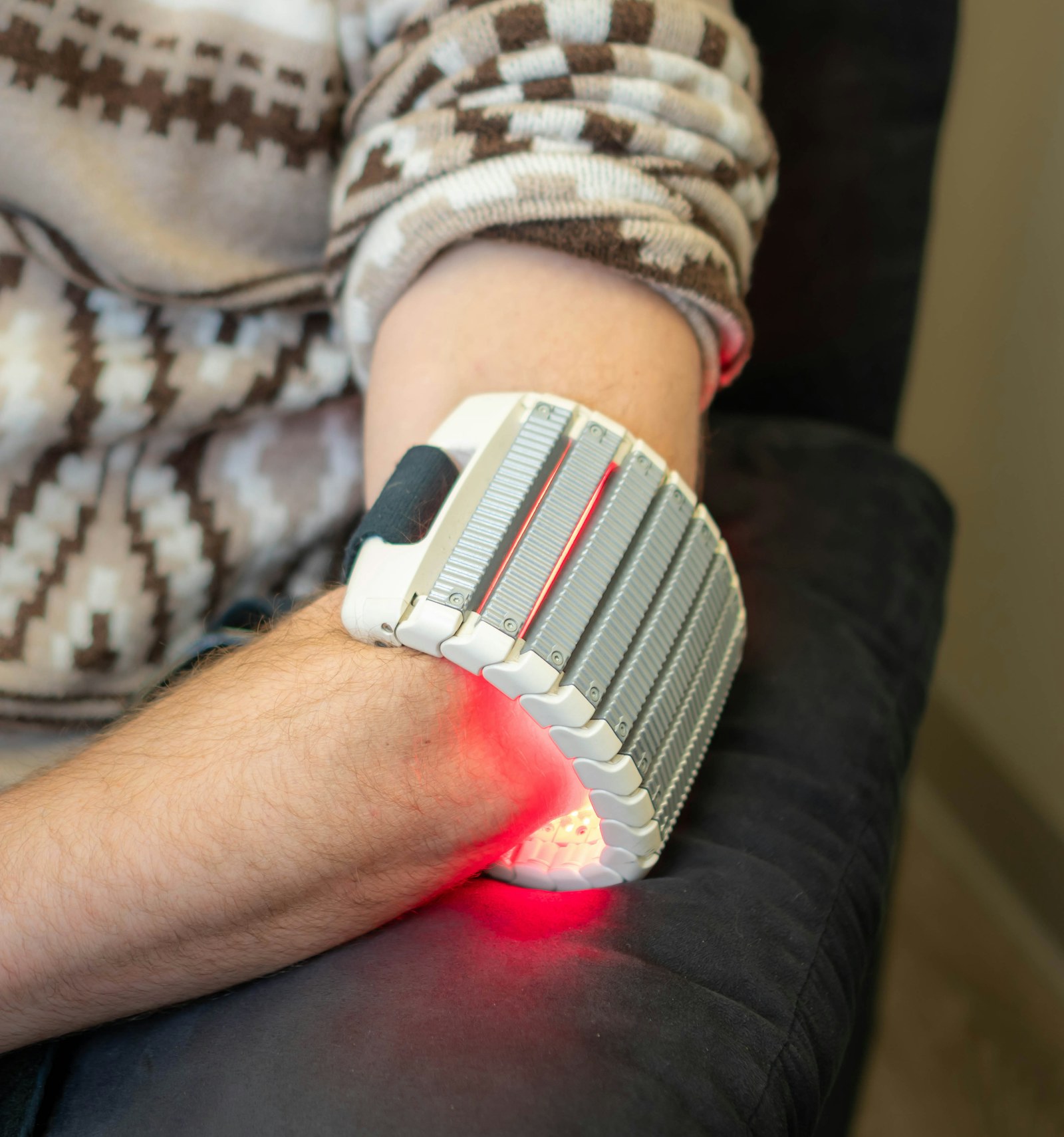
The cheap way to test the idea on a knee, elbow or shoulder. It’s slow for whole-body use, but you won’t need to find wall space.
Start small
Before spending big, find out whether you’ll stick with 20 minutes several times a week. A small panel or wrap can answer that, and consistency is what Rogan keeps coming back to.
Affiliate links. As an Amazon Associate I earn from qualifying purchases.
What to check before buying
- Coverage. A tiny device can't do what a large panel does, however powerful it claims to be.
- Dose information. A serious company tells you irradiance at a real distance and how long to use it.
- Eye guidance. It should come with goggles or clear instructions.
- Clearance claims. FDA clearance covers specific uses, generally not whole-body wellness.
- Returns. This category has a lot of unbranded panels, so buy where you can send it back.
Sources
- JRE #2537 with David Sinclair, transcript, around 1:51 to 1:55
- Our red light evidence guide, including the 2025 clinical consensus
This guide is for general information, not medical advice.