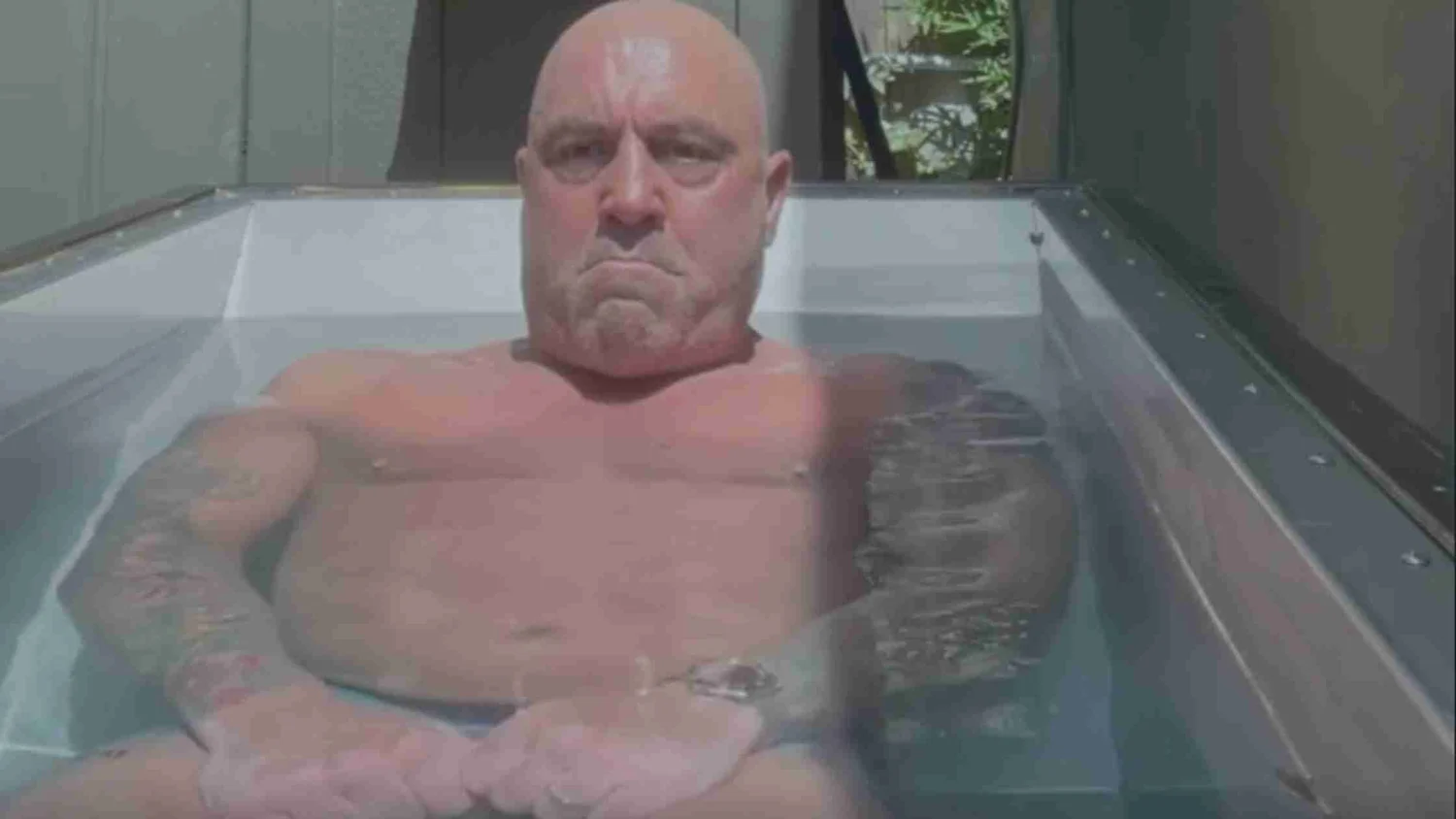
Joe Rogan’s cold-plunge routine looks intense because it is intense. He has years of exposure to very cold water and talks about temperatures that would make most first-time users climb straight back out.
That does not mean you need to copy the number on his chiller.
The useful version: get the water cold enough that you have to deliberately control your breathing, stay in for a short, repeatable period, and get out before technique turns into a toughness contest. Consistency matters more than proving you can tolerate 37°F.
Joe Rogan’s cold plunge routine at a glance
| Question | Practical answer |
|---|---|
| Temperature Rogan has discussed | Roughly mid-30s to low-40s °F |
| Typical session length | A few minutes |
| Beginner target | Usually much warmer: around 50–60°F is plenty cold to start |
| Best time | Morning, separate recovery session, or away from hypertrophy-focused lifting |
| Main immediate effect | Strong cold-shock / sympathetic response and reduced soreness perception |
| Biggest mistake | Going too cold, too long, too soon |
| Do you need an expensive tub? | No. Expensive systems mostly improve convenience, filtration and temperature control |
Which cold plunge does Joe Rogan use?
The brand he has named is Morozko Forge. On Morozko's own Joe Rogan page, he is quoted saying he has one and that he likes it at 34 degrees, cold enough for ice to break off the bottom and float to the top. A report on his early ice-bath posts cites 33°F.
You also do not need his tub. If you want the same function for less money, see what we would buy at each budget. "Cold plunge" and "ice bath" describe the same basic idea, and the main difference is whether a chiller or a bag of ice does the cooling.
What Rogan actually seems to get from cold exposure
Rogan talks about cold exposure less like spa recovery and more like controlled discomfort.
That framing makes sense. The first thing cold water does is not “heal” you. It stresses you. Your breathing changes, your blood vessels constrict, your heart rate and blood pressure respond, and every part of your brain tells you to get out.
The skill is staying calm enough to manage that response.
That is probably why people often describe feeling alert afterward. You have just created a very obvious sympathetic nervous-system event. You do not need a mystical explanation for the fact that you feel awake.
How cold does Joe Rogan go?
Across JRE clips and conversations, Rogan has talked about using water in roughly the mid-30s to low-40s °F.
That is very cold.
If you are new, 55°F can feel savage. Even 60°F can produce an involuntary gasp and rapid breathing when you first get in. The idea that “real” cold exposure starts below 40°F is internet machismo, not a physiological requirement.
Starting point
Where should you start?
Pick your experience level. These are practical starting points, not medical guidance. Ask a clinician first if you have a heart condition or a history of fainting.
55 to 60°F for 30 to 90 seconds
A bathtub with ice or a cold shower is enough to find out if you like this. Focus on calming your breathing, then get out while you still feel in control. Have someone nearby for your first sessions.
50 to 55°F for 1 to 2 minutes
You can settle your breathing within the first 30 seconds. This is a good time to look at an insulated tub so you can stop buying as much ice.
45 to 50°F for 1 to 3 minutes
If you use it several times a week, a chiller starts to make sense, because it removes the ice runs and keeps the temperature consistent.
Below 45°F, only if you stay in control
This is Rogan territory, but his 34°F is the result of years of practice, not the target. Colder water calls for less time. Get out for numbness, poor coordination or confusion.
Affiliate links. As an Amazon Associate I earn from qualifying purchases.
A smarter temperature progression
| Experience | Water temperature | Session idea |
|---|---|---|
| First few sessions | 55–60°F | 30–90 seconds |
| Comfortable beginner | 50–55°F | 1–2 minutes |
| Intermediate | 45–50°F | 1–3 minutes |
| Experienced | Below 45°F | Only if you already tolerate cold well and can stay controlled |
These are not medical prescriptions. They are a practical way to avoid the stupidest version of cold plunging: buying a chiller, setting it to 37°F on day one and turning the whole thing into survival.
How long does Joe Rogan stay in?
Usually a few minutes, depending on the session and temperature.
The important relationship is simple:
Colder water = less time needed.
You do not earn bonus points for staying in until your hands stop working properly. If your goal is a repeatable cold stimulus, the session should end while you are still in control.
A clean beginner goal is to get in, settle your breathing, stay composed for a short period and get out intentionally.
What cold plunging is actually good for
Cold-water immersion has a few reasonably defensible uses. It also has a lot of claims attached to it that get way ahead of the evidence.
1. Reducing soreness after hard training
This is the most practical athletic use.
Cold-water immersion can reduce perceived muscle soreness and may help short-term recovery when you need to perform again soon. If you have a tournament, multiple training sessions or back-to-back competition days, that can matter.
The catch is that “feeling less sore tomorrow” and “maximizing adaptation over months” are not always the same goal.
2. Feeling alert
This one is not complicated. Cold water is an acute stressor. It produces a strong arousal response.
If you stumble into a plunge in the morning, control the panic-breathing response and get out two minutes later, you are probably not going back to bed.
That is a perfectly legitimate reason to like it.
3. Practicing composure under discomfort
This is harder to quantify, but it is probably the part Rogan likes most.
Cold exposure gives you immediate feedback. You either control your breathing and stay calm or you do not. Used sensibly, that can become a little daily practice in not immediately obeying discomfort.
That is a psychological training idea, not a claim that cold water cures anxiety.
The dopamine claim: what is real and what gets exaggerated
You have probably seen some version of this online:
“Cold plunging increases dopamine 250% for hours.”
That is way more precise than most people realize.
Cold stress clearly affects catecholamines and the sympathetic nervous system. But turning specific findings from cold-exposure research into a guaranteed consumer promise about your exact dopamine level after a two-minute backyard plunge is a leap.
The practical thing you can actually observe is simpler: cold exposure can make you feel intensely awake and activated. That does not require pretending you have a live dopamine meter in your brain.
The muscle-growth problem nobody should hide
If you lift specifically to get bigger and stronger, timing matters.
Repeated cold-water immersion immediately after resistance training may reduce some of the signaling and longer-term adaptations involved in hypertrophy and strength development.
That does not mean cold plunges “kill gains.” It means recovery tools can have tradeoffs.
| Your priority | Better move |
|---|---|
| Maximize hypertrophy | Put the plunge at another time of day or on non-lifting days |
| Need to compete/train again soon | Immediate cold may be worth the recovery tradeoff |
| Morning alertness | Plunge in the morning, train later |
| General wellness habit | Keep it separate from your most important strength sessions |
If you are lifting three times per week and cold plunging every morning, this is easy to solve. You do not have to choose one forever.
Cold plunge before or after sauna?
Rogan often combines sauna + cold.
The appeal is obvious: intense heat, then intense cold, and sometimes repeat. It feels dramatic and leaves many people feeling great.
But there is no rule saying you have to alternate them to get value from either one.
If you want to mimic the JRE-style ritual:
- Sauna first.
- Cool down briefly.
- Cold plunge for a controlled short exposure.
- Repeat only if you tolerate it well and have time.
See the full Joe Rogan sauna guide for his documented heat routine.
What cold plunge should you buy?
This is where the category gets ridiculous fast.
A cold plunge has one core job: hold water cold enough for you to use it consistently.
Everything after that is convenience.
Option 1: bathtub + ice
Best for: figuring out whether you actually like this before buying equipment.
Pros:
- almost no upfront cost
- no dedicated space
- works immediately
Cons:
- buying ice gets annoying
- temperature changes every session
- not convenient enough for most daily users
Option 2: insulated tub + ice
Best for: low-cost home setup.
An insulated plunge tub holds temperature much better than a regular bathtub. You still deal with ice, drainage and sanitation, but it is a huge step up in convenience without entering luxury-plunge pricing.
Browse insulated cold plunge tubs on Amazon
Option 3: tub + chiller
Best for: people who know they will use it several times per week.
This is the sweet spot for serious home use. Set the temperature, keep the water filtered, open the lid and get in.
What matters:
- chiller power appropriate for your climate
- actual filtration
- easy sanitation
- insulation
- simple drainage
- replacement parts and warranty
Browse cold plunge chillers on Amazon
Option 4: premium all-in-one plunge
Best for: convenience, appearance and people who do not care about the price premium.
Premium tubs can be great. They can also cost several thousand dollars to do a job an insulated tub and competent chiller can do for much less.
Pay more for build quality, filtration, quiet operation, insulation and service. Do not pay more because an app sends you a badge for sitting in cold water.
What we would buy at each budget
| Budget | What makes sense |
|---|---|
| Under $100 | Use your bathtub or a basic portable tub and ice |
| $100–$500 | Insulated tub; add a cover and basic sanitation setup |
| $500–$1,500 | Tub + chiller system if you are committed to regular use |
| $2,000+ | Premium integrated setup only if convenience/design matters enough to justify it |
Browse cold-plunge tubs on Amazon
The best plunge is the one you can walk out to and use without turning it into a 45-minute project.
Features that actually matter
Ignore most of the lifestyle marketing. Look for:
- temperature stability
- good insulation
- water filtration
- sanitation
- easy drain access
- enough interior room to submerge comfortably
- a cover if it lives outside
- serviceable parts
- real warranty support
A beautiful tub full of gross water is a bad cold plunge.
Cold plunge vs. ice bath vs. cold shower
| Method | Best thing about it | Biggest downside |
|---|---|---|
| Powered cold plunge | Consistent and easy | Expensive |
| Ice bath | Cheap to start | Ice and setup become tedious |
| Cold shower | Free and convenient | Less consistent whole-body cooling |
| Natural cold water | Free and intense | Safety, currents, weather and uncontrolled temperature |
A cold shower is not “fake.” If the goal is to practice tolerating cold and wake yourself up, it is a perfectly reasonable place to begin.
Safety: do not turn this into a toughness contest
Cold water can produce a rapid cold-shock response, including gasping, hyperventilation and substantial cardiovascular stress.
Basic rules:
- do not start with near-freezing water
- do not hyperventilate or do breath-hold exercises in the water
- do not plunge intoxicated
- use a setup you can exit easily
- beginners should not plunge alone
- get out for chest pain, faintness, confusion, severe dizziness or loss of coordination
- people with cardiovascular disease, fainting history or other relevant conditions should ask a clinician before deliberate cold exposure
The American Heart Association has a useful overview of why sudden cold-water immersion deserves more respect than social media sometimes gives it.
More Rogan recovery guides
- Joe Rogan sauna routine
- Everything Joe Rogan uses
- Joe Rogan supplements
- Joe Rogan Iron Neck guide
- Joe Rogan’s inversion table
- Mouth taping, from JRE #1506
- Joe Rogan energy drink
Sources and verification
For exercise recovery and adaptation, the relevant literature is broader than one influencer protocol. PubMed’s cold-water immersion research includes systematic reviews and controlled studies on recovery and resistance-training adaptation.
Rogan’s exact cold routine changes over time, which is why we avoid presenting one temperature and duration as his permanent protocol.
Bottom line
Joe Rogan’s near-freezing plunges are an experienced person’s version of the practice, not the minimum effective dose.
Start warmer. Get your breathing under control. Stay in briefly. Use it for a reason.
If you love it enough to do it several times per week, then a chiller starts to make sense. If you try it six times and hate every second, congratulations: you just saved yourself a few thousand dollars.